🇯🇵 この記事を日本語で読む
This article contains affiliate links. If you book or buy through them, we may earn a commission at no extra cost to you.
- The Bottom Line: Can You Use Strollers on Tokyo Trains?
- Why Tokyo Trains Are Easier Than You Expect
- The Top 3 Hardest Moments (And How to Survive Them)
- Golden Rules for Strollers on Tokyo Trains
- Baby Carrier vs. Stroller: Which is Better?
- Crucial Survival Tool: Reliable Internet (eSIM)
- Explore Tokyo with Kids: “One Area Per Day” Strategy
- ❓ Frequently Asked Questions
- Conclusion: You’ve Got This!
The Bottom Line: Can You Use Strollers on Tokyo Trains?
Yes, absolutely!
Navigating Tokyo trains with kids and strollers might look intimidating at first. The stations are massive, the lines are complex, and everyone moves fast.
But let’s get straight to the point: Tokyo trains are actually incredibly stroller-friendly and manageable, IF you know the golden rules.
However, your trip can quickly turn into a stressful nightmare if you make these three mistakes:
❌ Riding during rush hour
❌ Underestimating the maze of Tokyo Station
❌ Thinking strollers are the only way to get around
In this complete family guide, we will show you exactly how to navigate Tokyo’s train system like a pro, keeping your family safe, stress-free, and happy!
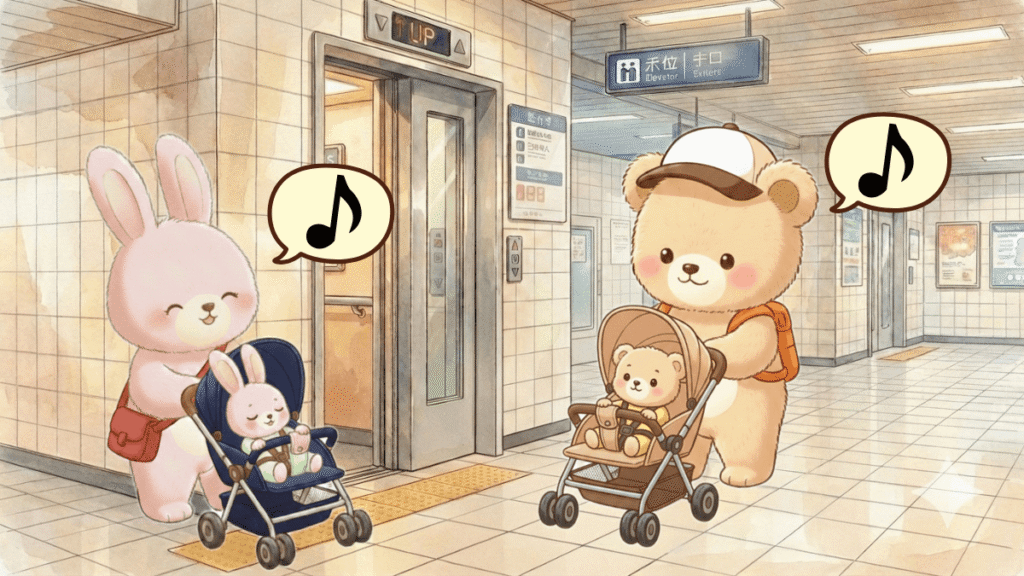

Tokyo trains look scary, but once you know the “hacks,” everything changes! Let’s make your family trip a breeze. 🌸
Why Tokyo Trains Are Easier Than You Expect
Many foreign parents worry about crowded trains and getting lost. But families who have actually visited Tokyo often say, “We were nervous at first, but it turned out to be totally fine!” Here is why:
- Elevators are everywhere: Major stations and tourist areas in Tokyo are thoroughly equipped with elevators and barrier-free routes.
- Locals use strollers daily: Tokyo parents regularly use strollers on trains. People are used to them, and station staff are always helpful.
- IC Cards (Suica/PASMO) are lifesavers: You don’t need to buy paper tickets. With an IC card on your phone, you can pass through gates hands-free while holding your child.
- Trains run on time — to the minute: departures and arrivals are astonishingly punctual, which makes a day with kids far easier to plan. You can schedule around naps, meals and little legs with confidence, without padding every transfer “just in case.”
Everything else about Japanese trains — which IC card to choose, kids’ fares, Shinkansen seats with a stroller — is in our complete family train guide:

💡 Golden rule for elevators: they might require a small detour, but knowing a safe, barrier-free route exists makes traveling with a baby much less stressful. Choose the safe route, not the shortest one!
The Top 3 Hardest Moments (And How to Survive Them)
① Riding during Tokyo Rush Hour (Avoid at all costs!)
Rush hour in Tokyo is intense. Boarding a train with a stroller during these times is practically impossible and highly stressful for children.
❌ Avoid these times if possible:
- Weekdays: 7:30 AM – 9:30 AM
- Weekdays: 5:00 PM – 7:00 PM
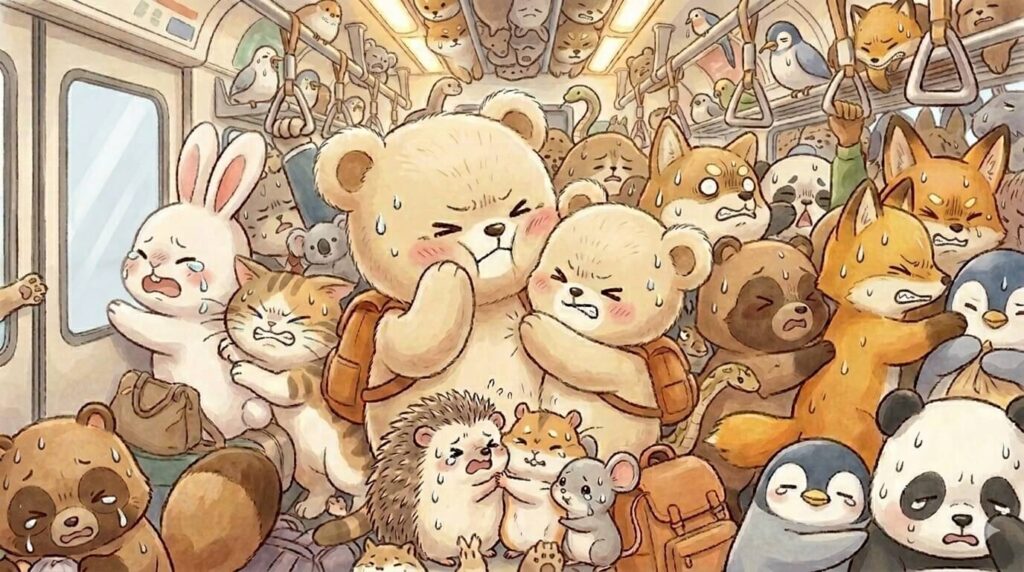
💡 Rule of thumb: rush hour is hard mode — plan your sightseeing to start after 10:00 AM.
② Getting Lost in the Tokyo Station Maze
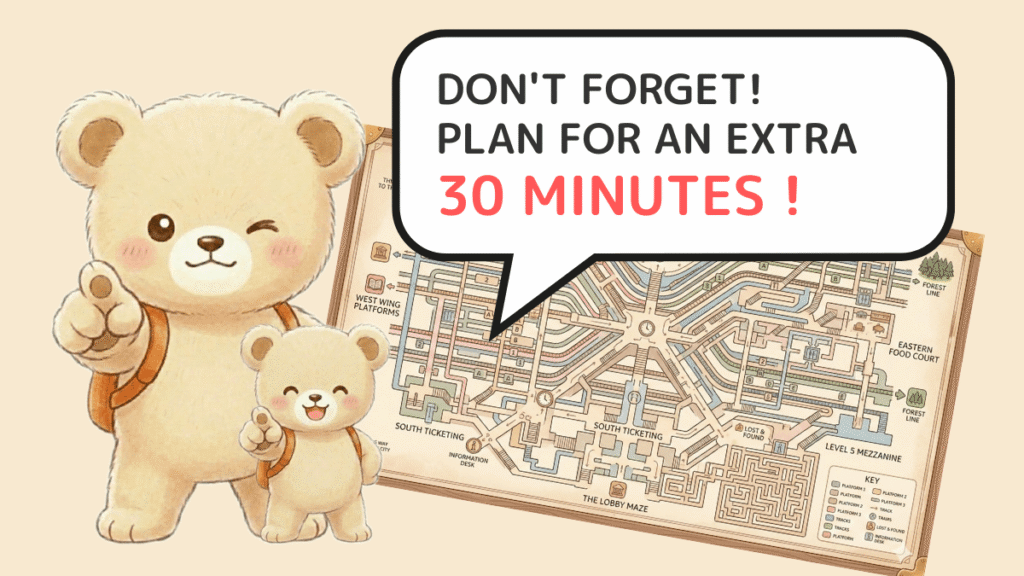
Tokyo Station is huge, confusing, and notorious for elevators that are located far apart.
💡 The Golden Rule for Tokyo Station:
Always build a 30-minute buffer into your schedule. If Google Maps says it takes 5 minutes to transfer, expect it to take 35 minutes with a stroller and kids.
③ Assuming Strollers Work Everywhere
While Tokyo is highly accessible, narrow platforms or stations with only one elevator can mean long wait times. Sometimes, waiting for the next, less crowded train is the smartest choice.
Golden Rules for Strollers on Tokyo Trains
Do you need to fold your stroller?
👉 No. Under normal conditions, you do not need to fold it.
Japanese train etiquette allows unfolded strollers. However, it’s best to stand at the ends of the train, near priority seating, or in the designated multi-purpose wheelchair/stroller spaces.
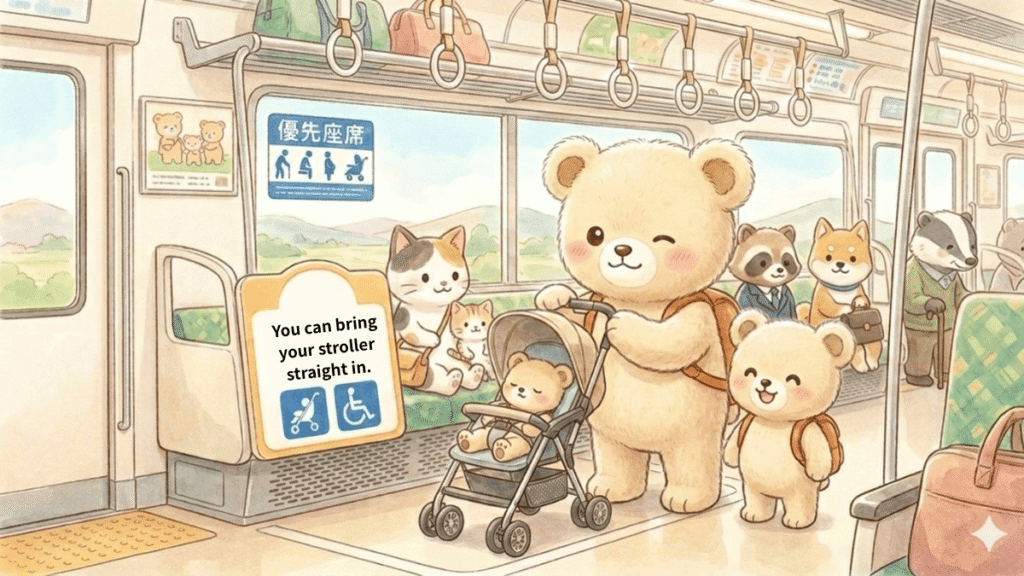
💡 Good to know: in Tokyo, the next train usually comes in 3–5 minutes. If a train looks too full, don’t rush — just wait for the next one.
Baby Carrier vs. Stroller: Which is Better?
There is no single correct answer. The best approach for traveling in Tokyo is to bring both and switch depending on the situation.
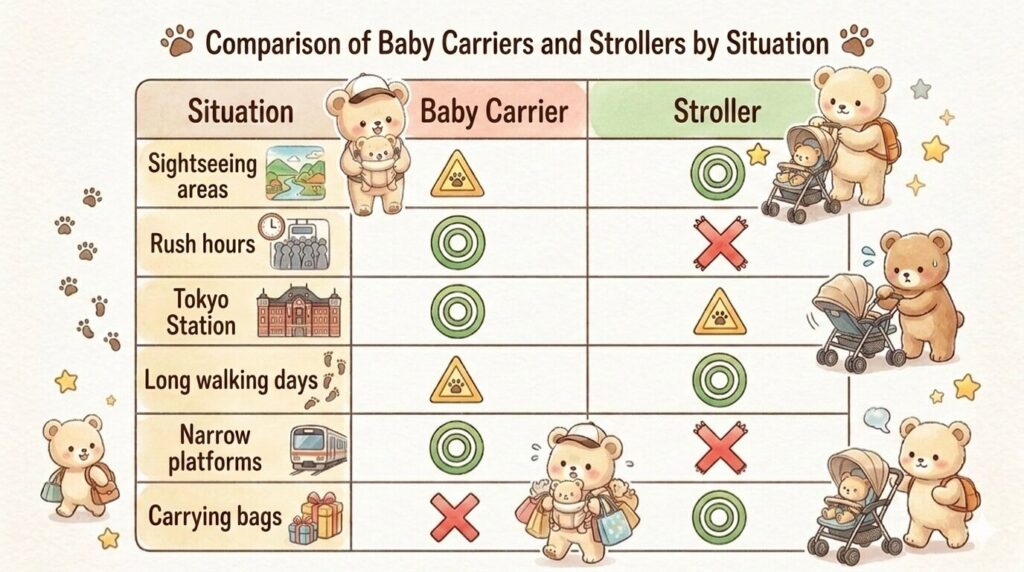
- Long walking days (Sightseeing): A stroller is perfect for carrying bags and letting your toddler nap.
- Complex stations & Rush hour: A baby carrier gives you the ultimate mobility to use stairs and escalators.
Crucial Survival Tool: Reliable Internet (eSIM)
When navigating Tokyo trains with kids, having a reliable internet connection is non-negotiable. You will constantly need it for:
- Checking Google Maps for elevator routes
- Using translation apps with station staff
- Keeping kids entertained: Many parents ask about the best tablet data plans for kids in Japan. A reliable eSIM with mobile hotspot capabilities allows your kids to watch YouTube on their iPads during long train rides!
If you want peace of mind the moment you land at Narita or Haneda airport, an eSIM is the best choice. No picking up pocket Wi-Fi, no extra devices to charge.
You’ll rely on your phone all day — Google Maps navigation, real-time train info, attraction wait times, and messaging when your group splits up. We used Airalo Japan eSIM on our family trip and it activated the moment we landed at the airport. No SIM card swap, no standing in line at the airport counter.
✅ Tethering allowed — kids’ tablets stay connected on long train rides
✅ Install the app before you fly — activates on arrival
✅ 15% OFF with code MAMABEARNEW
📱 Read Our Airalo Japan eSIM Review + 15% OFF Code →
👇 See how we used Airalo in Japan (Speed & Tethering tests)

👇 Which is better for your family? Read our full comparison!
Explore Tokyo with Kids: “One Area Per Day” Strategy
Trying to cover too much ground in Tokyo will exhaust both you and your little ones.
👉 The Best Strategy: Explore ONE area per day.
Based on our family’s experience, here are the most stroller-friendly itineraries that minimize train transfers and maximize fun:
- 👉 Ueno, Asakusa & Skytree Family Itinerary (Stroller-friendly route)
- 👉 Odaiba & Toyosu Family Model Course (Perfect for kids)
🍔 Stroller-Friendly Lunch Spots
Finding a restaurant where you can roll your stroller right up to the table is a lifesaver in Tokyo! If you are visiting these areas, check out our top lunch picks for families:
- 👉 Kid-Friendly Lunch Near Ueno Zoo (Stroller Accessible!)
- 👉 Toyosu & Odaiba Family Lunch Guide (Perfect for Strollers)
❓ Frequently Asked Questions
- QDo I have to fold my stroller on Tokyo trains?
- A
No — under normal conditions you can keep it unfolded. Japanese train etiquette allows open strollers; just stand at the ends of the car, near priority seating, or in the multi-purpose wheelchair/stroller spaces. The one exception is a packed train — if it looks too full, wait for the next one (usually 3–5 minutes).
- QWhen is rush hour in Tokyo?
- A
Weekdays 7:30–9:30 AM and 5:00–7:00 PM. Boarding with a stroller during these windows is genuinely difficult — plan your sightseeing to start after 10:00 AM and head back before the evening rush.
- QAre Tokyo train stations stroller-friendly?
- A
Yes. Major stations and tourist areas are thoroughly equipped with elevators and barrier-free routes, and local parents use strollers on trains every day. Elevators sometimes require a small detour, and at giant hubs like Tokyo Station you should budget an extra 30 minutes for transfers.
- QStroller or baby carrier — which is better for Tokyo?
- A
Bring both if you can, and switch by situation: the stroller wins on long sightseeing days (it carries your bags and nap-taking toddler), while the baby carrier wins in complex stations and at busy times, when stairs and escalators give you full mobility.
- QDo kids pay train fares in Tokyo?
- A
Children aged 6–11 pay a child fare (roughly half price), and preschoolers under 6 ride free — up to two per paying adult. The full rules, including IC cards for kids and Shinkansen seats, are in our complete family train guide.
Conclusion: You’ve Got This!
Tokyo trains are not scary when you know how the system works. Remember to avoid rush hours, give yourself extra time at major stations, secure a strong internet connection, and explore at your own pace.
Welcome to Japan, and enjoy making beautiful family memories! 🌸
▶ You Might Also Like




コメント